
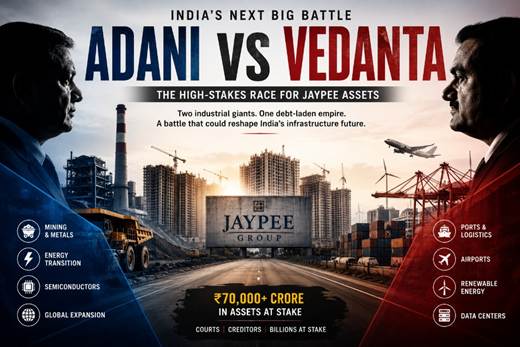
India’s corporate landscape is witnessing one of its most closely watched insolvency battles, with Vedanta and Adani Group locked in a high-stakes contest for the assets of debt-laden Jaiprakash Associates Ltd (JAL), the flagship company of the Jaypee Group.
The battle, which has moved through multiple legal forums, highlights the growing strategic importance of Jaypee’s extensive infrastructure, real estate, and land assets. With thousands of acres of land and several marquee projects under its umbrella, Jaypee remains one of the most significant distressed asset opportunities in India.
Adani Enterprises emerged as the successful bidder after receiving approval from lenders and subsequently securing approval for its resolution plan. Creditors reportedly favored Adani’s proposal because it offered larger upfront payments and a faster repayment timeline despite Vedanta submitting a higher overall bid value.
Vedanta, led by billionaire Anil Agarwal, has strongly challenged the outcome. The company argues that its revised proposal offered greater value to creditors and has questioned aspects of the evaluation process. The dispute has since escalated through the National Company Law Appellate Tribunal (NCLAT) and reached the Supreme Court.
At the center of the controversy is a broader debate within India’s insolvency framework: should creditors prioritize the highest overall value or place greater emphasis on certainty of payment and speed of recovery? Adani has maintained that the bidding process followed established procedures and that lenders exercised their commercial judgment in selecting the winning proposal.
The Jaypee assets represent far more than a routine acquisition. Industry observers view them as strategically important due to their real estate holdings, infrastructure projects, and long-term development potential in key growth corridors across northern India.
The outcome of the legal proceedings could influence how future insolvency cases are evaluated, particularly when competing bids offer different combinations of upfront cash, long-term payments, and asset restructuring plans.
As India’s corporate restructuring ecosystem continues to mature, the Vedanta-Adani contest for Jaypee may ultimately become one of the most significant insolvency case studies in recent years.