
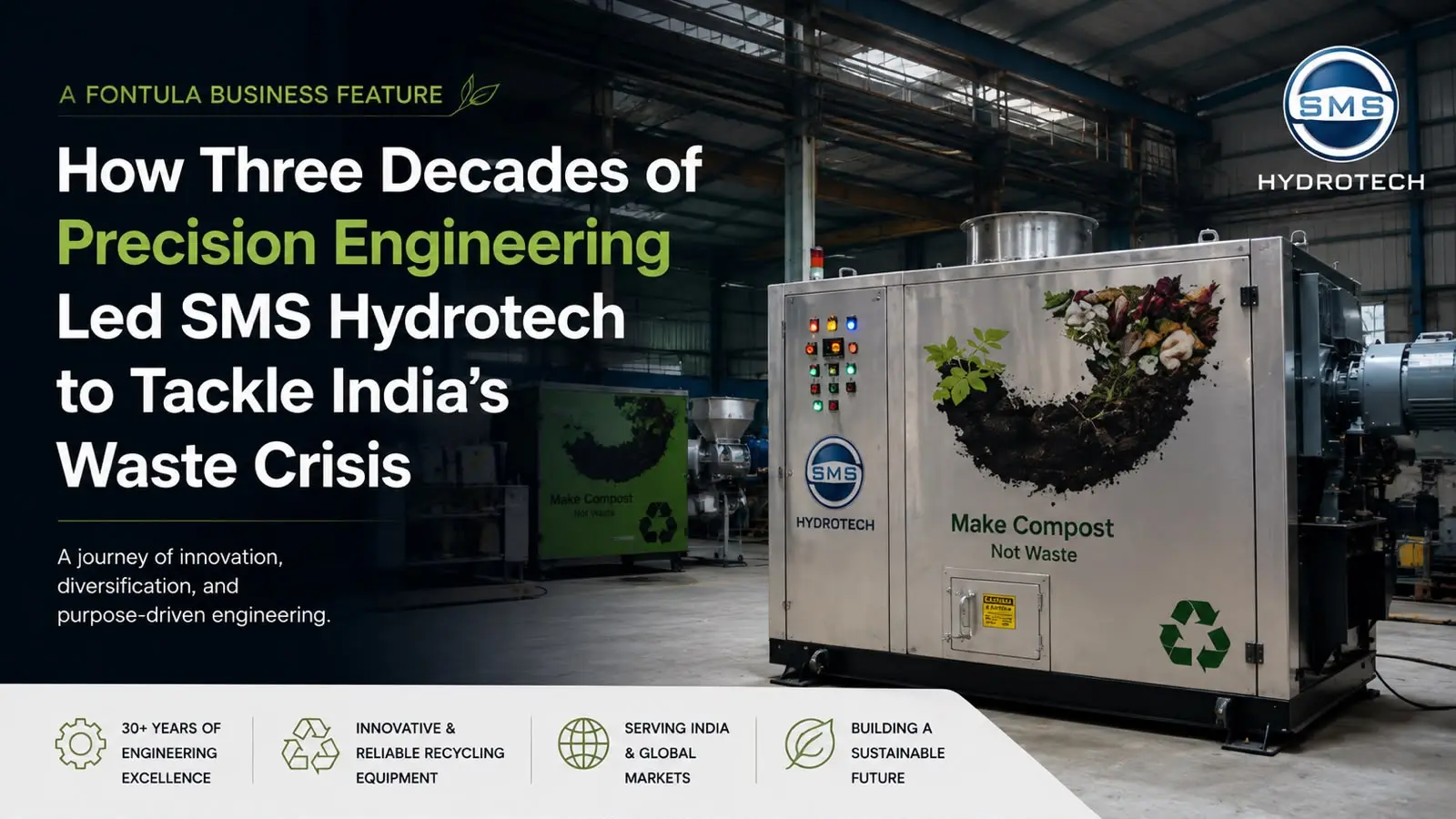
How Three Decades of Precision Engineering Led SMS Hydrotech to Tackle India’s Waste Crisis By Firdouz Hameed | Fontula Business Some companies are founded to chase opportunities. Others evolve to solve problems that society can no longer ignore. SMS Hydrotech belongs to the latter. The company’s journey began more than thirty years ago as a precision engineering and machining enterprise serving India’s automotive and industrial sectors. For decades, the team built its reputation on manufacturing excellence, delivering high-quality engineering solutions to demanding industries. Then came a turning point. Around 2015, the leadership at SMS Hydrotech observed two significant trends unfolding across India. The first was the rapidly growing challenge of industrial and municipal waste management. The second was the limited availability of robust, locally manufactured recycling equipment capable of addressing that challenge at scale. Rather than watching from the sidelines, the company chose to reinvent itself. Drawing upon decades of engineering expertise, SMS Hydrotech expanded into designing and manufacturing heavy-duty recycling machinery, including twin-shaft shredders, tyre shredders, plastic recycling equipment, and organic waste composting systems. Today, the company’s machines operate across India and in international markets, helping industries and municipalities convert waste into valuable resources while reducing their environmental footprint. Yet what distinguishes SMS Hydrotech is not merely the machinery it manufactures. “Our mission has always been to build reliable, high-performance machines that help industries and municipalities convert waste into valuable resources while reducing environmental impact,” says Surya V. Singh. Perhaps the philosophy of the company is best captured in another simple but powerful statement: “What motivates us most is solving real industrial problems through engineering rather than simply building machines.” That mindset reflects a broader vision of engineering—not as manufacturing alone, but as a means of creating sustainable solutions for some of today’s most pressing environmental challenges. As industries worldwide increasingly embrace circular economy principles, companies like SMS Hydrotech demonstrate how traditional engineering businesses can successfully reinvent themselves while remaining true to their technical roots. Their story is a reminder that meaningful innovation often begins with a simple question: How can our expertise solve a larger problem?
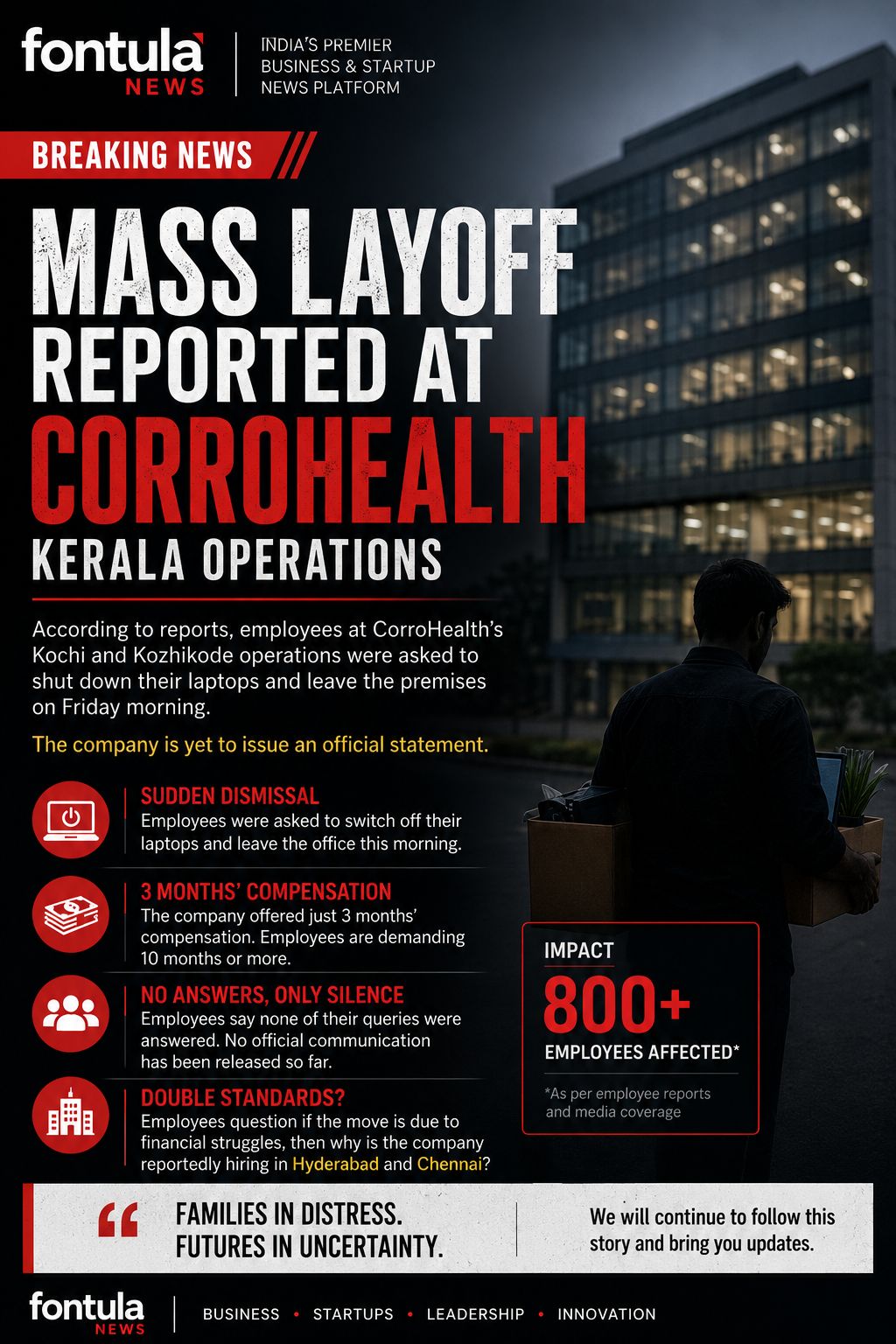
Mass Layoffs Reported at CorroHealth’s Kochi and Kozhikode Operations
Mass Layoffs Reported at CorroHealth’s Kochi and Kozhikode Operations A major workforce reduction has reportedly taken place at CorroHealth’s Kerala operations, with employees alleging that the company has begun shutting down its Kochi and Kozhikode branches. According to multiple employee accounts, staff members who reported for work on Friday morning were instructed to switch off their laptops and were informed that their employment had come to an end. Employees claim they were offered three months’ compensation as part of the separation process. Several affected employees have expressed dissatisfaction with the compensation package, arguing that it does not adequately reflect their years of service. Some have reportedly demanded a significantly higher severance package and have sought greater transparency regarding the company’s decision. Another concern raised by employees is the apparent continuation of hiring in CorroHealth’s Hyderabad and Chennai operations. They question whether financial difficulties alone explain the reported closure of the Kerala operations if recruitment is continuing elsewhere within the organization. As of the time of publication, CorroHealth has not issued an official press statement confirming the reported layoffs, explaining the rationale behind the restructuring, or responding to the concerns raised by employees. Fontula News has reached out for the company’s response. This article will be updated if and when CorroHealth releases an official statement or additional verified information becomes available.
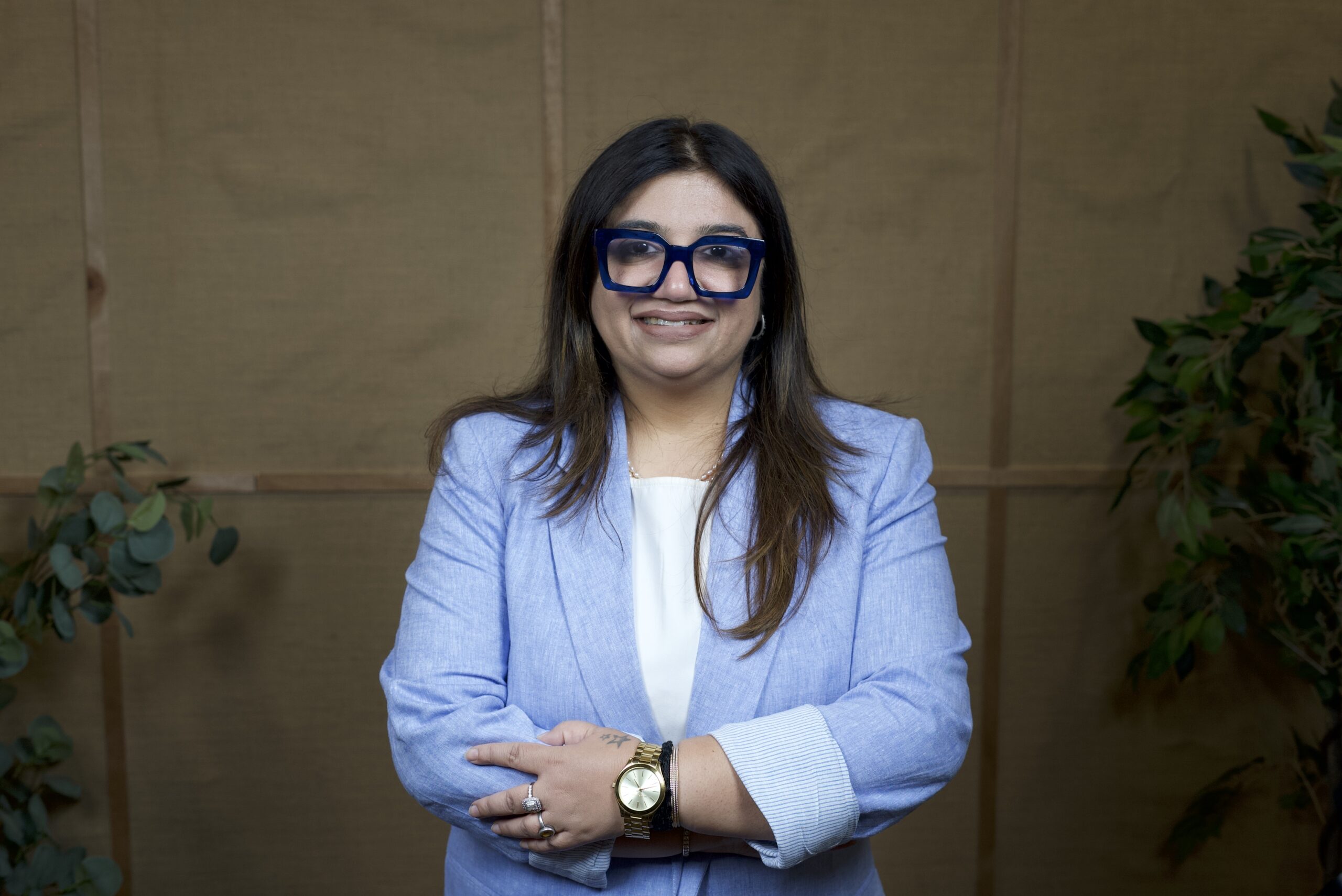
Rashi Khanna Joins Fontula Power 20
Some entrepreneurs build businesses. Others build conversations, communities, and lasting impact. Rashi Khanna has done all three. Fontula is delighted to welcome Rashi Khanna to Fontula Power 20, our editorial initiative celebrating entrepreneurs, innovators, and changemakers who are redefining leadership through purpose, resilience, and impact. With more than 25 years of experience across corporate leadership and entrepreneurship, Rashi has established herself as a respected entrepreneur, P-PaaS specialist (Podcast Production as a Service), TEDx speaker, podcast host, counselor, aroma alchemist, and power community builder. As the Founder and CEO of KYAA MATLAB NETWORK, she has helped individuals and businesses harness the power of podcasting and authentic storytelling to build meaningful brands and stronger connections. Beyond business, Rashi is the Honorary Founder Chair of the Ra by Rashi Foundation, where she champions SMEs, women entrepreneurs, and underserved communities through storytelling, podcast initiatives, and digital empowerment. Her work is driven by a philosophy she calls Hyper Empathy—the belief that genuine human connection creates lasting transformation. A NIMHANS-certified Lay Counsellor, Rashi is equally passionate about mental well-being and authentic leadership. She believes true success lies not in projecting perfection but in embracing vulnerability, learning from setbacks, and helping others rise along the way. Her willingness to speak openly about motherhood, personal struggles, and entrepreneurial challenges has made her a relatable and trusted voice for thousands. Her initiative, EMPATHE, works closely with individuals facing alcohol and substance abuse challenges, offering support, awareness, and pathways toward recovery. Through UPODD UAE Rashi Khanna is building a vibrant ecosystem where entrepreneurs, creators, and leaders connect, collaborate, and grow together in the UAE. The platform reflects her vision of empowering communities through premium podcasts and purposeful networking. Her influence extends across business, education, and media. She has delivered podcasting sessions at leading institutions, including the Indian Institute of Management (IIM), advised entrepreneurs on personal branding and digital storytelling, and continues to create platforms that amplify meaningful voices through her podcast school Kyaa Matlab Voice Netwrok. She has also served in an advisory role with the Central Board of Film Certification and successfully advanced to the pre-finals of Shark Tank, reflecting her innovative approach to entrepreneurship. At Fontula, we believe leadership is measured not only by achievements but by the lives one inspires. Rashi Khanna embodies that belief through her commitment to empowering entrepreneurs, fostering empathy, and creating opportunities for others to tell their stories. We are proud to feature Rashi Khanna in Fontula Power 20 and celebrate her remarkable journey of leadership, resilience, and purposeful impact.

IFFCO Eyes Global Expansion as India’s Fertilizer Giant Prepares for a New Export-Driven Era
India’s agricultural backbone may soon play a far larger role on the global stage as the Indian Farmers Fertiliser Cooperative Limited (IFFCO) prepares to expand its export footprint in the coming years. Known for its dominance in domestic fertilizer production, the cooperative is now signaling a strategic shift toward international markets, driven by rising global demand for sustainable and cost-effective agricultural inputs. From Domestic Strength to Global Strategy IFFCO has long been one of India’s most influential agricultural cooperatives, supplying fertilizers to millions of farmers across the country. Its operations have traditionally been focused on ensuring food security within India, but recent developments suggest a broader global vision is taking shape. With increasing pressure on global food systems, fluctuating fertilizer prices, and supply chain disruptions across major producing regions, IFFCO is positioning itself as a reliable alternative supplier for developing and emerging economies. Industry analysts suggest that the cooperative’s scale, government backing, and integrated production network give it a strong advantage in entering export markets—particularly in Asia, Africa, and parts of Latin America. Why Global Markets Are Opening Up Several global factors are aligning in favor of fertilizer exporters like IFFCO: Rising agricultural demand in Africa and Southeast Asia is creating a steady need for affordable fertilizers. At the same time, geopolitical instability in key fertilizer-producing regions has led to supply uncertainties, pushing countries to diversify their import sources. IFFCO’s production capabilities in urea, DAP, and NPK fertilizers place it in a strong position to serve these markets. The cooperative’s focus on maintaining stable pricing—combined with India’s broader diplomatic push for agricultural cooperation—further strengthens its export potential. Technology, Sustainability, and Innovation Push Beyond traditional fertilizer production, IFFCO has been investing in innovation-led agriculture solutions. This includes nano-fertilizer technology, which is designed to improve crop yield efficiency while reducing environmental impact. Such innovations could become a key differentiator in international markets, especially as governments worldwide tighten regulations on chemical fertilizers and move toward more sustainable agricultural practices. IFFCO’s emphasis on research-driven agriculture also aligns with global sustainability goals, making its products more attractive in markets prioritizing eco-friendly farming solutions. Export Challenges and Strategic Barriers Despite strong potential, IFFCO’s global expansion is not without challenges. Logistics and export infrastructure remain a critical hurdle, particularly in scaling production for international demand while maintaining domestic supply commitments. Additionally, competition from established global fertilizer exporters such as China, Russia, and Middle Eastern producers will require IFFCO to sharpen its pricing and distribution strategies. Regulatory compliance in foreign markets is another factor that could influence the speed of expansion. Each region has different agricultural standards, subsidy structures, and import policies that must be carefully navigated. India’s Broader Agricultural Diplomacy IFFCO’s export ambitions also align with India’s broader geopolitical and agricultural outreach strategy. India has increasingly positioned itself as a partner in food security cooperation, especially with developing nations that rely heavily on agricultural imports. By expanding fertilizer exports, India strengthens not only its economic footprint but also its diplomatic influence in global agricultural supply chains. The Road Ahead IFFCO’s transition from a domestically focused cooperative to a global fertilizer exporter represents a significant shift in India’s agricultural narrative. If executed effectively, it could redefine how India participates in global food production systems—not just as a consumer or supporter, but as a key supplier. The coming years will determine whether IFFCO can successfully balance domestic responsibilities with international expansion, but the direction is clear: India’s fertilizer giant is preparing for a much bigger role on the world stage
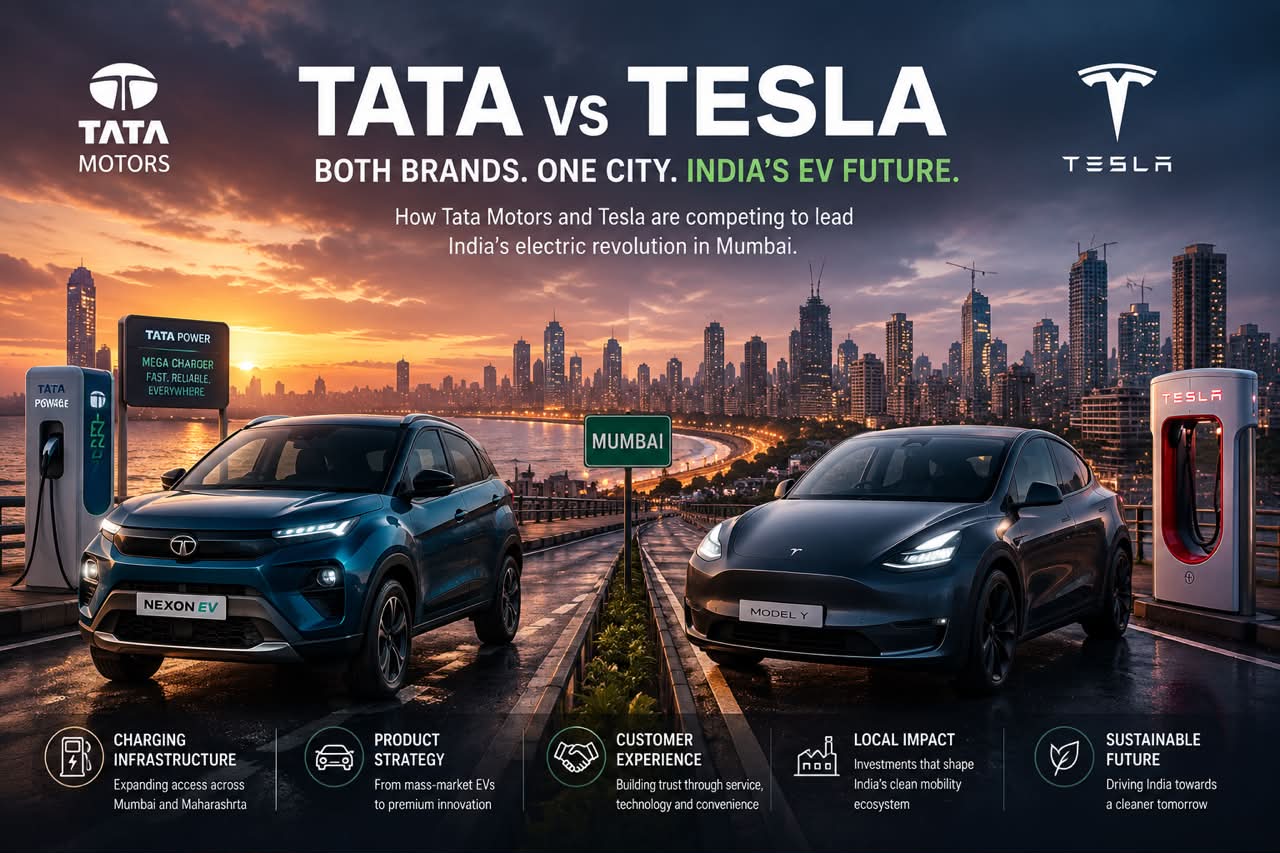
Mumbai Becomes the Battleground for India’s EV Future as Tata and Tesla Accelerate Expansion
Mumbai is fast emerging as the epicentre of India’s electric vehicle revolution, with both homegrown giant Tata Motors and global EV leader Tesla strengthening their presence in the city. As India pushes toward cleaner mobility, the competition between the two brands is beginning to define what the country’s EV future could look like. Tata Motors: Strengthening Its Home Advantage Tata Motors has long been the backbone of India’s electric mobility journey, and Mumbai remains a key market in its expansion strategy. The company continues to push aggressively across multiple EV segments—from entry-level hatchbacks to premium SUVs—aiming to make electric mobility accessible to the mass market. Recent developments show Tata’s sharper focus on affordability and scale. Models like the Punch EV, Tiago EV, and Nexon EV have helped the brand dominate India’s EV sales charts, while newer launches such as the Curvv EV and Harrier EV signal its move toward a more premium lineup. In Mumbai specifically, Tata has also invested heavily in charging infrastructure through its Tata Power collaboration, including high-speed MegaCharger hubs and highway fast-charging networks. These initiatives are designed to reduce range anxiety and support long-distance EV adoption across Maharashtra. At the same time, Tata is evolving its strategy in the premium EV segment, increasingly leaning on global partnerships and platform sharing to accelerate development timelines. This shift reflects the company’s intent to stay ahead in an increasingly competitive EV landscape. Tesla: Building a Premium EV Footprint in Mumbai Tesla’s entry into India has brought global attention to Mumbai’s growing importance in the EV sector. The company has positioned the city as its primary gateway to the Indian market, with early sales and deliveries heavily concentrated in Maharashtra. Tesla’s strategy in Mumbai focuses on the premium segment, targeting high-income buyers with advanced technology, long-range electric vehicles, and a global brand experience. The Model Y has already become the face of its India expansion, reinforcing Tesla’s positioning as a luxury EV brand rather than a mass-market player. Alongside vehicle sales, Tesla is also expanding its ecosystem approach—combining retail experience centres with service infrastructure and charging access. This mirrors its global model, where software, charging networks, and brand experience play as important a role as the cars themselves. However, Tesla’s presence in India is still at an early stage, with limited volume compared to established domestic players. Its growth in Mumbai will depend heavily on pricing strategy, local infrastructure expansion, and potential future manufacturing decisions. Mumbai: The New EV Capital in the Making Mumbai is uniquely positioned in India’s EV transition. High purchasing power, dense urban mobility needs, and rapid infrastructure development make it the ideal testing ground for both mass-market and premium EV strategies. For Tata, Mumbai represents scale, trust, and dominance in the affordable EV segment. For Tesla, it represents aspiration, exclusivity, and entry into one of the world’s fastest-growing automotive markets. Together, these two brands are shaping a dual-speed EV ecosystem in the city—one focused on accessibility, the other on premium innovation. What This Means for India The competition between Tata and Tesla in Mumbai reflects a larger shift in India’s automotive future. While Tata is driving widespread adoption through affordability and infrastructure, Tesla is pushing the boundaries of premium electric mobility. As both companies expand their presence, Mumbai is becoming more than just a market—it is becoming a proving ground for India’s EV ambitions
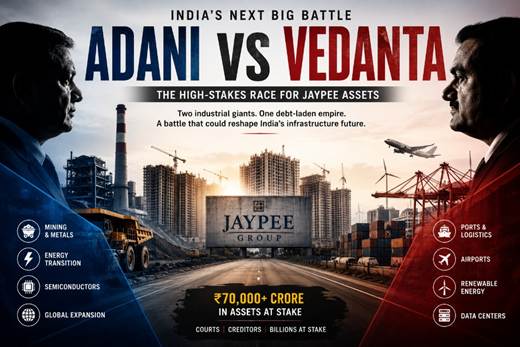
Vedanta and Adani Clash Over Jaypee Assets as Insolvency Battle Intensifies
India’s corporate landscape is witnessing one of its most closely watched insolvency battles, with Vedanta and Adani Group locked in a high-stakes contest for the assets of debt-laden Jaiprakash Associates Ltd (JAL), the flagship company of the Jaypee Group. The battle, which has moved through multiple legal forums, highlights the growing strategic importance of Jaypee’s extensive infrastructure, real estate, and land assets. With thousands of acres of land and several marquee projects under its umbrella, Jaypee remains one of the most significant distressed asset opportunities in India. Adani Enterprises emerged as the successful bidder after receiving approval from lenders and subsequently securing approval for its resolution plan. Creditors reportedly favored Adani’s proposal because it offered larger upfront payments and a faster repayment timeline despite Vedanta submitting a higher overall bid value. Vedanta, led by billionaire Anil Agarwal, has strongly challenged the outcome. The company argues that its revised proposal offered greater value to creditors and has questioned aspects of the evaluation process. The dispute has since escalated through the National Company Law Appellate Tribunal (NCLAT) and reached the Supreme Court. At the center of the controversy is a broader debate within India’s insolvency framework: should creditors prioritize the highest overall value or place greater emphasis on certainty of payment and speed of recovery? Adani has maintained that the bidding process followed established procedures and that lenders exercised their commercial judgment in selecting the winning proposal. The Jaypee assets represent far more than a routine acquisition. Industry observers view them as strategically important due to their real estate holdings, infrastructure projects, and long-term development potential in key growth corridors across northern India. The outcome of the legal proceedings could influence how future insolvency cases are evaluated, particularly when competing bids offer different combinations of upfront cash, long-term payments, and asset restructuring plans. As India’s corporate restructuring ecosystem continues to mature, the Vedanta-Adani contest for Jaypee may ultimately become one of the most significant insolvency case studies in recent years.